home

Guantanamo Juvenile Charged With Murder, Faces Military Tribunal

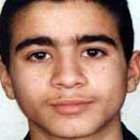
Omar Khadr was a 15 year old Canadian, captured on the battlefield in Afghanistan. You can read the details here.

The Pentagon today officially charged him with murder.

Khadr is accused of throwing a grenade that killed U.S. Delta soldier Sgt. Christopher Speer during a firefight in Afghanistan July 27, 2002.

He was 15 at the time and was held for three months in Afghanistan before being transferred to Guantanamo Bay, where he remains today. In addition to the charge of murder, Khadr will also stand trial on attempted murder, providing material support for terrorism, conspiracy and spying.

Omar should not be tried by military tribunal. As Human Rights Watch said,

More...

International standards recognize that children under the age of 18 are a particularly vulnerable group, and are entitled to special care and protection because they are still developing physically, mentally and emotionally. These standards include certain key principles, including the use of detention only as a measure of last resort, the separation of children from adults, the right of children to maintain contact with their families, and the right to a prompt determination of their case.

In addition, treaties binding on the United States recognize the special situation of children who have been recruited or used in armed conflict, and their rights to prompt demobilization, and rehabilitation and reintegration assistance.

In cases where children are believed to have committed war crimes, they can be formally charged and should be provided with counsel and tried in accordance with international standards of juvenile justice.

Here's more on Omar's capture and his dysfunctional family life, including details about how a bullet blinded him in one eye during the gunfight.

As Jeanne D'Arc of the now defunct Body and Soul blog said at the time,

Omar Khadr is as much a victim of these people as a member of the family. He's eighteen years old. When he was captured in Afghanistan, he was fifteen -- a child turned into a soldier by parents from hell. And our government's response to this victim of child abuse was to abuse him further.

More on the Khadr family is here.

And yes, there are reports he was tortured. In 2005, The Toronto Star reported,

In February, his U.S. lawyer told reporters the teenager had been used as a human mop to clean urine on the floor and had been beaten, threatened with rape and tied up for hours in painful positions at Guantanamo Bay.

In 2006, Rolling Stone had this feature article, The Unending Torture of Omar Khadr.

Omar should be sent back to Canada for rehabilitation. Or trial by the juvenile justice system. He should not be facing murder trial by tribunal in Guantanamo.

< Obama's Foreign Policy Speech | Rioting at a Private Prison >
  • Premium Ads

  • Blog Ads

  • Contribute To TalkLeft

    donate to TalkLeft


  • Display: Sort:
    hmmmmmmmmmmmm (5.00 / 1) (#4)
    by cpinva on Tue Apr 24, 2007 at 04:19:37 PM EST
    by that logic, the vc were all guilty of war crimes. yet, i don't recall them being tried by military tribunal upon capture. they were treated (sometimes poorly) as POW's. just because the taliban don't wear fancy uniforms, doesn't make them any less an organized fighting force, with a chain of command.

    the kid is a prisoner of war, under the geneva conventions. this is why our people are at such grave risk, if they're captured. of course, our CIC doesn't bother to mention this.

    Beheading (none / 0) (#45)
    by Abdul Abulbul Amir on Wed Apr 25, 2007 at 08:26:34 AM EST
    ...the kid is a prisoner of war, under the geneva conventions. this is why our people are at such grave risk, if they're captured...

    Our people are at grave risk if they are captured because the folks that capture them want to behead them.  Period.

    Signature Song
    [ Parent ]

    Uniforms are not the issue (5.00 / 2) (#6)
    by Jeralyn on Tue Apr 24, 2007 at 04:39:20 PM EST
    Omar's age is the primary issue, making his trial by military tribunal abhorrent.

    Other issues are whether he was tortured.  

    He's also not speaking to his American lawyers, won't participate in the proceedings and his Canadian lawyers have had a difficult time getting approval to visit him at Guantanamo.

    It seems like he will be tried as if in abstentia.

    This just isn't right.

    He was old enough to throw a hand grenade. (none / 0) (#8)
    by jimakaPPJ on Tue Apr 24, 2007 at 05:47:38 PM EST


    [ Parent ]
    It's hard to believe (5.00 / 2) (#32)
    by glanton on Tue Apr 24, 2007 at 08:27:49 PM EST
    That anyone would defend trying him for Murder.  All this does is distort the meaning of the word almost beyond recognition.  

    No wonder so many people are tempted to equate what happened at Virginia Tech to what is happening in Iraq.

    Attacking an occupying soldier is not an act of terrorism. And it most certainly is not attempted murder.  

    Hold them as POW's when you capture them.  Don't try and pretend that the killed American soldier was just some guy minding his own business who got senselessly murdered.

    The man was a gurellia (none / 0) (#44)
    by jimakaPPJ on Wed Apr 25, 2007 at 07:48:32 AM EST
    Attacking an occupying soldier is not an act of terrorism. And it most certainly is not attempted murder.

    Glanton, as Col. Potter would say, "Horse hockey."

    In the past gurellias were quickly tried and executed.

    We're just too damn slow.

    [ Parent ]

    Cute (none / 0) (#47)
    by glanton on Wed Apr 25, 2007 at 08:53:17 AM EST
    But still not showing how it has anything to do with murder.  You think just because you call it that, makes it that way?

    Again, to attack an occupying soldier has naught to do with murder, it doesn't matter whether you're wearing a uniform or not.  

    There is such a thing as making reality out to be what you want it to be, only because you have the upper hand.  Clearly the American government can do that with this guy.  

    There is a difference between being able declare something, though, and being right.  Too bad you join this government in refusing to see the difference.  

    Remember all the flack you gave people for calling the VA Tech incident terrorism, Cho a terrorist, etc?  Remember I agreed with that.  Because words mean something.

    [ Parent ]

    History (none / 0) (#48)
    by squeaky on Wed Apr 25, 2007 at 09:00:48 AM EST
    I am sure ppj knows that if you name someone correctly then it is easy to lynch them, quite popular in fact.

    Skip the courts, just get some rope and find a tree, right ppj?

    [ Parent ]

    Another smear from squeaky (none / 0) (#51)
    by jimakaPPJ on Wed Apr 25, 2007 at 09:41:40 AM EST
    Posted by Squeaky at September 19, 2005 11:19 PM

    Rove never needed proof for his smear machine, why should I.

    I see that you are following your very own guidlines.

    [ Parent ]

    glanton (none / 0) (#49)
    by jimakaPPJ on Wed Apr 25, 2007 at 09:39:18 AM EST
    Hate to pop your bubble, but when we become incapable of defending ourselves you will find that a bunch of Americans will be hung, etc.

    And I think it is beyond discussion that he was a gurellia.

    Save your sympathy for the soldier that was killed. He deserves it. His killer does not.

    [ Parent ]

    Did you read my comment? (none / 0) (#52)
    by glanton on Wed Apr 25, 2007 at 10:07:47 AM EST
    It had nothing to do with America defending itself.    

    It had to do with language.  What the term murder means.  And then what happens in a War contex.  And how those contexts are starkly different.  

    People killing one another on a battlefield doesn't meet what the term does.

    He did not sneak up on the soldier while on leave and shoot him and take his wallet.  Nor did he kill the soldier after finding out he;d been diddling his wife.  Nor did he lose his marbles and shoot the soldier, and some thirty other people, on a university campus.

    Strop being a propagandist.  Think instead.  It can be refreshing.

    [ Parent ]

    Glanton (none / 0) (#53)
    by jimakaPPJ on Wed Apr 25, 2007 at 12:53:58 PM EST
    The charge is murder:

    The definition of murder:

    To kill (a human being) unlawfully and with premeditated malice

    Now, what you are claiming is:

    Again, to attack an occupying soldier has naught to do with murder, it doesn't matter whether you're wearing a uniform or not.  

    There is a difference between being able declare something, though, and being right.  Too bad you join this government in refusing to see the difference.

    What difference?

    Are you claiming that this gurellia had the right to attack because the murdered US soldier was "occupying?"

    [ Parent ]

    No (none / 0) (#54)
    by glanton on Wed Apr 25, 2007 at 01:07:50 PM EST
    You want to make oppositional voices look as though they support the killing of soldiers.  This is contemptible.

    You speak of murder in terms of killing unlawfully and with malice.  I ask you, what do such terms have to do with the context of War?

    What I am saying is that when you participate in a War, then you're going to get shot at and attacked during that War.  Ergo, you might well get killed, just as surely as you are likely to kill.  This is just a simple fact.  It has nothing to do with Law.  And it da&#ed sure aint murder to do so.

    Look, to say that a soldier during War getting killed by a grenade is murder makes no sense.  I am frankly surprised that even the Bush Administration has come to push such a ludicrous line of thinking.  

    Have we really gotten to the point now that we're saying when American troops land in your country and start bombing and shooting, that if you fire back then you're a murderer?  Even Polk didn't go so far in his racist screeds against the Mexican militias.  

    What you are embracing strips War of all meaning, and strips Murder of all meaning as well.  

    But it makes for good propaganda, don't it?

    [ Parent ]

    I haven't gotten enough info on this case (none / 0) (#55)
    by sarcastic unnamed one on Wed Apr 25, 2007 at 01:16:02 PM EST
    to form an overall opinion yet, but g-man,
    when American troops land in your country and start bombing and shooting, that if you fire back then you're a murderer?
    what if it's not "your" country?

    I'm not debating (at this point), whether or not it was "his" country, just that if it wasn't "his" country, and he faught against and killed American troops, how do you call him? As a mercenary?

    [ Parent ]

    sarcasmo (none / 0) (#56)
    by glanton on Wed Apr 25, 2007 at 01:38:26 PM EST
    That's a good question and not easy to answer.  "Mercenary" is infinitely better than Murderer, but may not entirely cut it unless he was getting paid.

    But while you and others seem willing to guide your final analysis of this issue after more facts about this guy's nationality come in, I am not at all concerned with that question.  Because whether he was motivated by: 1)Country; 2)Ideology; or 3)Simple Money

    He was participating in a War, not committing murder. And the dead American soldier?  He is a casualty of War, not a murder victim.

    Sarcasmo, we as a nation have over the last six years made the term "terrorism" such a catchall that we now have people on this very website, ideological allies of mine no less, seduced into calling the VA Tech massacre a terrorist act.  

    Our President has also been for some time designating anyone who shoots at an American soldier in our ME campaigns a terrorist.  And there has been a movement in the media to follow suit, though thankfully it has been slow and patchy.  

    Now we have another shift, one that even my cynical arse would never have forseen.  We are actually conflating an act of War with a Murder. I ask you, are we trending to a point where we will soon be calling all Americans KIA murder victims?


    [ Parent ]

    Interesting question g-man (none / 0) (#58)
    by sarcastic unnamed one on Wed Apr 25, 2007 at 02:47:44 PM EST
    Murder as a war crime is unprecedented - not that that should mean much as "war crimes" are a very recent construct, have been tried in very few cases, are definitionally extremely vague and continue to evolve.

    That said, with what little I know, I can't say I completely support the charge of murder, nor can I completely dismiss it - as his non-citizenship of the country he was fighting in, that he was not fighting for a legally recognized gvt (I don't think AQ was legally recognized as the gvt of Afghanistan, I could be wrong), etc., etc., muddies the waters.

    [ Parent ]

    It will be interesting then (none / 0) (#59)
    by glanton on Wed Apr 25, 2007 at 02:57:12 PM EST
    to see where you come down after getting more info.

    [ Parent ]
    Murder as war crime (none / 0) (#63)
    by Gabriel Malor on Wed Apr 25, 2007 at 03:24:32 PM EST
    I have to disagree with you here. Most definitely murder of civilians is considered a war crime. This is uncontroversial. The question in this case is whether the murder of a solder can be a war crime. History tells us that is uncontroversially a war crime, too.

    Remember that a "war crime" is defined as any violation of the laws of war.

    In 1935, Italian General Pietro Badoglio used mustard gas on soldiers and civilians in contravention of the 1925 Geneva Protocol.

    In 1939, the German invaders executed wounded soldiers and other POWs in contravention of the 1907 Hague Convention.

    In 1940, British soldiers were captured and executed by the SS in contravention of the 1907 Hague Convention.

    Throughout WWII, the Germans, the British, and the Americans conducted unrestricted submarine warfare, in contravention of a series of treaties. (Note, however, that this British and American war crime went unpunished.)

    These are just a few solder-on-soldier war crimes. (I have left out any purely soldier-on-POW crimes because POWs get special protection not afforded to regular combatants.) Clearly, it's possible for a soldier-on-soldier action to be a war crime.

    Whether it's using a prohibited weapon on enemy combatants (like mustard gas) or using prohibited strategies on enemy combatants (like unrestricted submarine warfare), soldier-on-soldier confrontations must still conform to the laws of war. Violations of those laws are war crimes and murders.

    It's possible that the present case comes under the "using prohibited strategies on enemy combatants" category. The prohibited strategy I have in mind is hiding in a civilian populace. However, as has been mentioned a few times in this thread, we need more information to determine what realy is going on here.

    [ Parent ]

    He threw the grenade (5.00 / 1) (#66)
    by glanton on Wed Apr 25, 2007 at 03:32:02 PM EST
    During a firefight! That much "information" is already determined.  People were shooting at each other during battle and some people got killed, who would ever have thunk it?

    Gabe, I find it very frustrating, all this talk of War Crimes and Murder in the context of this case.  It's just staggering to me that they have the balls to charge him with murder and that they're appraently going to get away with it encountering not even a whiff of resistance.  Even this thread is technically about his age.

    Not a single example you give, above, comes anywhere close to a thrown grenade during a firefight.  Not even close.  

    [ Parent ]

    Murder, Manslaughter, or none of the above (none / 0) (#69)
    by Gabriel Malor on Wed Apr 25, 2007 at 03:48:47 PM EST
    glanton, I didn't say I found the murder charge appropriate. Just that it's not some new-fangled thing for war crimes to be murders of soldiers.

    I'm actually curious to see what legal definition of "murder" is being applied. Murder generally means conduct which, at a minimum, rises to the level of malice (that is, "extreme indifference to human life").

    But the U.S. generally recognizes that "heat of passion" situations do not meet that level. In fact, under common law, mutual combat which results in death only rises to the level of manslaughter.

    How U.S. criminal law and common law apply to wartime situations is unclear.

    [ Parent ]

    I know (none / 0) (#72)
    by glanton on Wed Apr 25, 2007 at 04:02:03 PM EST
    you didn't embrace the murder charge.  The frustration isn't directed at your research efforts, which have been illuminating in their own right.  It is rather directed at the whole situation.

    I just don't see how the government can credibly apply Murder, Manslaughter, "crime of passion," or any other kinds of civil laws to what has happened here.  

    There is no way the throwing of that grenade can reasonably be called a crime; raher, and unfortunately, it was and is what happens in war.  That's why, for example, some of us view War as a last resort.  Rather than a first.

    Tell me how this doesn't leap head first down the slippery slope of declaring all American Soldiers KIA as murder victims?  Or wounded soldiers as victims of assault and battery?  

    A government initiates military action but disclaims that the resultant deaths had anything whatever to do with said initiation.  Talk about the Pretense of Clean Hands!!!

    [ Parent ]

    Trials (none / 0) (#74)
    by Gabriel Malor on Wed Apr 25, 2007 at 04:14:43 PM EST
    There is no way the throwing of that grenade can reasonably be called a crime; raher, and unfortunately, it was and is what happens in war.

    Lets assume for a minute that Khadr was part of a regularly constituted army and that he and his unit conducted themselves entirely within the rules of war. (Let's also assume that no special rules apply for an attack on a medic.)

    In this hypothetical, if he were to be captured, he would be entitled to all the protections of POW status. This includes protection from being tried for doing things like killing our soldiers. You'd be entirely correct in saying "this is what happens in war."

    However, what about a hypothetical where Khadr was not part of a regularly constituted army unit? What if he was not conducting himself within the rules of war?

    In this second hypothetical, if he were to be captured, he would not be entitled to POW status. He would be subject to trial as an unlawful combatant. (See Hamdi v. Rumsfeld if you're one of those who thinks there's no such thing.)

    My next question: what do we charge him with?

    [ Parent ]

    Unlawful Combatant (none / 0) (#75)
    by glanton on Wed Apr 25, 2007 at 04:23:09 PM EST
    Is a term I have problems with, I admit.  If this disqualifies me in your mind to have this discussion with you, because I disagree with the Law, then so be it.

    My problem with it comes from the fact that it attempts to tidy up something that is innately messy and chaotic.  Like occupying a foreign country.  Especially a foreing country with no credible military force per se, the fighting comes from everywhere all at once.  

    I would have us hold ourselves to the highest possible ethical standards.  Which would mean, instead of looking for loopholes, treating those captured on the battlefield as humanely as possible and recognizing the fact that they are in fact Prisoners of War whatever else some lawyers may want to call it.


    [ Parent ]

    Unlawful Combatancy and POWs (none / 0) (#76)
    by Gabriel Malor on Wed Apr 25, 2007 at 04:33:45 PM EST
    If this disqualifies me in your mind to have this discussion with you, because I disagree with the Law, then so be it.

    No, it doesn't disqualify you. As I bitched about here significant portions of the international community have agreed with you. They codified that belief in Article 44 of the Additional Protocol 1 to the Geneva Conventions of 1977. It holds that

    A combatant who falls into the power of an adverse Party while failing to meet the requirements set forth in the second sentence of paragraph 3 shall forfeit his right to be a prisoner of war, but he shall, nevertheless, be given protections equivalent in all respects to those accorded to prisoners of war by the Third Convention and by this Protocol.

    Now, the U.S. isn't a part to Additional Protocol 1, and for various reasons Article 44 hasn't passed into customary international law. But that still places the U.S. (and me) in a minority.

    As I said in that comment, I support the rules of war because they are designed to provide civilians with the maximum protection possible in an inherently destructive situation. I wrote:

    The whole point of requiring combatants to behave in a certain way (for example, by not wearing civilian clothes or hiding in places of religious worship) is to protect civilians. AP 1 removed that incentive, essentially saying that no matter what acts a combatant takes in war he will be protected.

    And I stand by that. We abhor attrocities like the My Lai massacre because the military killed civilians. Imagine how common such killings would be if we approved of armies hiding among civilian populations. How horrendous war would be if our soldiers couldn't tell the difference between civilians and enemy soldiers.

    International law should continue to incentivise activity which protects civilian lives.

    [ Parent ]

    Very well said, Gabe (none / 0) (#77)
    by glanton on Wed Apr 25, 2007 at 04:38:14 PM EST


    [ Parent ]
    So you don't miss it (none / 0) (#102)
    by glanton on Thu Apr 26, 2007 at 10:23:24 AM EST
    I have a response to this downthread where things aren't so skinny.

    [ Parent ]
    That's not what I meant (none / 0) (#68)
    by sarcastic unnamed one on Wed Apr 25, 2007 at 03:46:32 PM EST
    although it doesn't matter much.

    I meant this war crimes charge of, simply, murder - ie., that a, I don't know, mercenary/civilian combatant/whatever, murdered a soldier on the field of battle (I don't know how to define it any better) and not a war crimes charge that encompasses murder, like genocide - is unprecedented, or at least that's what my googling has led me to believe.

    [ Parent ]

    glanton (none / 0) (#84)
    by jimakaPPJ on Wed Apr 25, 2007 at 06:14:09 PM EST
    All you have to do is make a sympathetic statement about the dead soldier every now and then instead of claiming he wasn't murdered and maybe I would believe you.

    What you are really saying is that gurellias should be accorded the same rights as real soldiers.

    That is nuts. For starters... Gurellias are not in an identifiable uniform, allowing them freely mingle with the local populace, allowing them to get close for an attack, and preventing return fire in case we hit an "actual" civilian.

    I could go on, but won't because I doubt you will ever see the difference.

    And yes, sooner or later you have to decide if you are with, or against, the troops.

    [ Parent ]

    "All I have to do" (none / 0) (#95)
    by glanton on Wed Apr 25, 2007 at 10:00:56 PM EST
    American politicians are making War.  This is something we can all agree on.  And American soldiers are fighting War, that's another "sky is blue" observation.

    The third is, a certain consequence of the first two is that American soldiers are going to get killed.  This is why some of us, Jim, see War as a last resort.  As opposed to a First.

    To respond with "Oh my God he was murdered" is beyond silly.  I wouldn't even have thought the Bush Administration capable of such loopy rhetoric.  I wouldn't have thought it of you, either.  Looks like I miscalculated on both fronts.

    [ Parent ]

    I wrote (none / 0) (#96)
    by glanton on Wed Apr 25, 2007 at 10:02:57 PM EST
    This is why some of us, Jim, see War as a last resort.  As opposed to a First.

    But in reality it is of course one huge factor among many explaining why we see War as a last Resort.

    [ Parent ]

    Naomi Klein in "Fascist America, in 10 easy (5.00 / 1) (#37)
    by conchita on Tue Apr 24, 2007 at 09:51:56 PM EST
    steps" from the Guardian today lists Step 2 as:

    2. Create a gulag

    Once you have got everyone scared, the next step is to create a prison system outside the rule of law (as Bush put it, he wanted the American detention centre at Guantánamo Bay to be situated in legal "outer space") - where torture takes place.

    At first, the people who are sent there are seen by citizens as outsiders: troublemakers, spies, "enemies of the people" or "criminals". Initially, citizens tend to support the secret prison system; it makes them feel safer and they do not identify with the prisoners. But soon enough, civil society leaders - opposition members, labour activists, clergy and journalists - are arrested and sent there as well.

    This process took place in fascist shifts or anti-democracy crackdowns ranging from Italy and Germany in the 1920s and 1930s to the Latin American coups of the 1970s and beyond. It is standard practice for closing down an open society or crushing a pro-democracy uprising.

    With its jails in Iraq and Afghanistan, and, of course, Guantánamo in Cuba, where detainees are abused, and kept indefinitely without trial and without access to the due process of the law, America certainly has its gulag now. Bush and his allies in Congress recently announced they would issue no information about the secret CIA "black site" prisons throughout the world, which are used to incarcerate people who have been seized off the street.

    Gulags in history tend to metastasise, becoming ever larger and more secretive, ever more deadly and formalised. We know from first-hand accounts, photographs, videos and government documents that people, innocent and guilty, have been tortured in the US-run prisons we are aware of and those we can't investigate adequately.

    But Americans still assume this system and detainee abuses involve only scary brown people with whom they don't generally identify. It was brave of the conservative pundit William Safire to quote the anti-Nazi pastor Martin Niemöller, who had been seized as a political prisoner: "First they came for the Jews." Most Americans don't understand yet that the destruction of the rule of law at Guantánamo set a dangerous precedent for them, too.

    By the way, the establishment of military tribunals that deny prisoners due process tends to come early on in a fascist shift. Mussolini and Stalin set up such tribunals. On April 24 1934, the Nazis, too, set up the People's Court, which also bypassed the judicial system: prisoners were held indefinitely, often in isolation, and tortured, without being charged with offences, and were subjected to show trials. Eventually, the Special Courts became a parallel system that put pressure on the regular courts to abandon the rule of law in favour of Nazi ideology when making decisions.


    link to Klein's article (5.00 / 1) (#38)
    by conchita on Tue Apr 24, 2007 at 09:57:30 PM EST
    International Treatment of Child Soldiers (5.00 / 1) (#60)
    by Gabriel Malor on Wed Apr 25, 2007 at 03:05:19 PM EST
    Thus far, my examination of this issue has focused on the way in which the laws of war generally treats combatants. Because I hadn't had an opportunity to think about it or study it before now, I set aside the issue of separate treatment of juvenile soldiers. I've now had a chance to examine the state of the law in that area; because so many have wondered, here is what I found:

    First, before we start, let's be completely clear up front that this fellow--fighting and captured at sixteen years of age--was a child. It doesn't matter that he may have been regarded as an adult in Afghanistan or in inumerable other countries and cultures. The simple fact is, he's in our power now and we regard sixteen year-olds as children.

    This conclusion is supported, at a minimum, by customary international law and possibly by treaty as well (more on the treatment of treaties below).

    Second, I called him a "child soldier" in the title to this comment because, whether or not he is eligible for POW status, he was fighting in a war. Unless treaties or conventions exempt children from treatment under the usual laws of war, he will have the same burdens and protections placed on him as other war participants.

    As I wrote upthread, the most common of these are the Geneva Conventions. Of significant importance in the last five years is the Rome Statute (even though the U.S. isn't a party).

    With those preliminary matters out of the way, I started looking around to see what international laws specifically applied to children. At the top of the list is the 1990 Convention on the Rights of the Child ("CRC") (PDF). The CRC doesn't apply directly to the issue of war, but it does lay out how children are to be treated in many circumstances. (Incidentally, it defines "child" as anyone under the age of eighteen.)

    Article 37 is most important for our discussion. It has several parts. First, it prohibits "torture or other cruel, inhuman or degrading treatment or
    punishment," capital punishment, and life imprisonment for child offenders. Second, it places limits on the imprisonment or detention of children:

    The arrest, detention or imprisonment of a child shall be in conformity with the law and shall be used only as a measure of last resort and for the shortest appropriate period of time.

    It also provides that child prisoners be separated from adults, that they have access to lawyers, and that they have the right to challenge the legality of their imprisonment.

    These prohibitions provide some idea of the treatment of children prisoners. Note, however, that it does not rule out trials for children. It just requires that they be fair and otherwise in accord with international human rights standards.

    Though it never directly mentions war prisoners, Article 37 seems to be directly on point. There is one significant problem: the United States is not a party to the CRC. We signed it but never ratified it. (Somalia is the one other holdout, though this doesn't really mean much; Somalia hasn't had a government since 1990.)

    It's possible that some will argue that the treatment of children codified in the CRC has actually passed into the ambit of customary international law. That argument faces two significant problems in the context of child soldiers.

    First, customary international law is recognized as the widespread practice of states, believing that their conduct is required by law. There are two key elements to customary internationa law: (1) widespread practice; and (2) belief that they are obligated to behave that way. Unfortunately, it is doubtful that there is a widespread practice of treating children in accordance with the prohibitions in Article 37. Moreover, the very language of the CRC makes it clear that the parties joining the agreement that they believed they were doing something new, not codifying generally accepted practices.

    Second, in the grand scheme of things, customary international law is trumped by actually signed treaties and conventions. It is analogous to the way that our government can overrule common law by the use of statutes or amendments. The U.S. is an actual party to the Geneva Conventions which regulate warfare. Therefore, those conventions will take precedence over customary international law; In other words, even if it were the case that the protections in Article 37 were customary international law, it is far from clear that the U.S. would be bound to follow it.

    Because of my work with International Justice Mission, I knew that child soldiers were an important issue for the Special Court for Sierra Leone. The Special Court was formed by agreement between the government of Sierra Leone and the UN following the end of the civil war in that country.

    After much debate and discussion, it was decided that child soldiers between the ages of 15 and 18 would be subject to trials at the Special Court. However, imprisonment was ruled out as a punishment. Instead, "alternative programs" were to be utilized in sentencing. Rehabilitation was a major goal of these alternative programs, but I have no information on whether this arrangement was carried out in good faith.

    From the above, it is not plainly illegal to subject child soldiers to trial. However, it's possible that children are due special protections even in the course of their trials.

    Because of that possibility, I also poked around to find out what I could about the treatment of children in trials. I found the U.N. Standard Minimum Rules for Juvenile Justice 1985 ("Beijing Rules"). Though the Beijing Rules are not binding, they provide a good idea of how juveniles are to be treated by court systems.

    Of most importance to me was the emphasis on the future well-being of the child. Though it explicitly disclaims favoring rehabilitation over what it calls "just deserts," I think there is a clear preference for rehabilitative punishments (excuse the near-oxymoron). Note also that the Beijing Rules also prohibit capital punishment, but not imprisonment.

    Finally, all the above is not an attempt to say that the current system is good or bad. My point was only to look and see what rules exist which apply to this situation. Obviously, child advocates are free to point out that the current system is a bad one.

    Gabe (none / 0) (#86)
    by jimakaPPJ on Wed Apr 25, 2007 at 06:20:01 PM EST
    If he was not considered a child by the Taliban when he committed the acts, how does that transfer to us?

    And, if it does,,,Teenagers are tried as adults all the time.

    As for Sierra Leone, rehab might be an option when the person is:

    a. not a radical pledged to jihad.

    b. in a situation in which the war is over.

    Thanks for your thoughts

    [ Parent ]

    Good thinking, Jim! (none / 0) (#87)
    by Edger on Wed Apr 25, 2007 at 06:24:02 PM EST
    Let the Taliban guide your moral choices. What a natural fit.

    [ Parent ]
    edger (none / 0) (#89)
    by jimakaPPJ on Wed Apr 25, 2007 at 06:43:56 PM EST
    How typical of you to try and mistate something.

    The fact that the Taliban may regard him as an adult has no moral content.

    The question was, why does that change when we capture him?

    [ Parent ]

    As I noted. (none / 0) (#90)
    by Edger on Wed Apr 25, 2007 at 06:46:26 PM EST
    It's a natural fit for you, Jim.

    Do you have a problem with it?

    [ Parent ]
    edger (none / 0) (#94)
    by jimakaPPJ on Wed Apr 25, 2007 at 08:27:23 PM EST
    Actually edger it is a demonstration of your, and squeaky's, comment guideline.

    Posted by Squeaky at September 19, 2005 11:19 PM

    Rove never needed proof for his smear machine, why should I.


    [ Parent ]
    Why does it change? (none / 0) (#100)
    by glanton on Thu Apr 26, 2007 at 10:02:17 AM EST
    The question was, why does that change when we capture him?

    It changes because as you know, we are thank God far different from the Taliban in any number of ways, and their designations represent zero compunction on our parts.

    You stated that we try minors as adults all the time.  I would say that while you are of course right, this too is a big problem, not a precedent for reasonable people to expand upon.

    FWIW  

    [ Parent ]

    Huh? (none / 0) (#1)
    by eric on Tue Apr 24, 2007 at 03:37:46 PM EST
    Waid a second, it's illegal to kill people during a war?  Throwing a grenade on a battlefield sounds like something that is pretty much your average run-of-the-mill warfare.  Plus he's just a kid.  But even if he wasn't... what's up here?

    Basic LOIAC (none / 0) (#2)
    by Gabriel Malor on Tue Apr 24, 2007 at 03:42:48 PM EST
    Waid a second, it's illegal to kill people during a war?  

    It is if you don't wear a uniform, answer to a chain of command, carry your arms openly, and conduct your operations in accordance with the laws of war.

    [ Parent ]

    So the American revolutionaries were terrorists (5.00 / 1) (#3)
    by lilybart on Tue Apr 24, 2007 at 04:13:44 PM EST
    Really? Then we were not fighting a war since the others were not in uniform either.

    If it was not a war, then why isn't his action considered self-defense?

    [ Parent ]

    Regulars vs. Irregulars (none / 0) (#5)
    by Gabriel Malor on Tue Apr 24, 2007 at 04:28:49 PM EST
    lilybart,

    American revolutionaries generally wore uniforms. Militiamen, later called "regulars" after the formation of the Continental Army wore uniforms, answered to a chain of command, carried their arms openly, and otherwise conducted themselves within the conventions of war at the time.

    The exception to this were the "irregulars" or partisan warfighters. Though they had a chain of command, they often didn't wear uniforms and worked behind the front lines. They were subject to summary execution when caught rather than prisoner or parole status. The British complained fiercly about partisan fighters because they violated all the conventions of war at the time.

    Partisan fighters were also used by the North and South during the Civil War. The Lieber Code--one of the earliest codifications of the Laws of War--was instituted by President Lincoln to deal with the issue (and many others).

    It dealt with irregulars in two ways. First, guerillas, defined as a "self-constituted set of men unintegrated with an organized army which did not take prisoners," were war criminals and subject to summary execution. However, partisans, defined as "a corp of soldiers who tries to injure his enemy by attacking the enemies lines of supply and communication remote from the battle lines," were not. The key distinction between the two was that partisans were soldiers, usually in uniform and answerable to the chain of command; guerillas were not.

    [ Parent ]

    I understand that, but (5.00 / 1) (#7)
    by eric on Tue Apr 24, 2007 at 05:46:39 PM EST
    But don't you have the right to protect yourself if a foreign army invades your country?  I don't think that I would like to be tried as a murderer if I killed an invader of my country.  Do I need to join the army to shoot back?

    [ Parent ]
    Very good point eric..... (5.00 / 1) (#11)
    by kdog on Tue Apr 24, 2007 at 05:54:31 PM EST
    If a Taliban regiment was storming up my block, my first thought wouldn't be "where's my uniform?", I'd start making Molotov's.  I'd consider it my patriotic duty...and simple survival.  Certainly not a crime...no matter what the law books say.

    [ Parent ]
    Levee en mass is protected. (5.00 / 1) (#12)
    by Gabriel Malor on Tue Apr 24, 2007 at 06:00:00 PM EST
    First, as SUO has already pointed out, the kids country wasn't invaded. He went to a warzone (though probably because his parents forced him) and took up arms. So this is not a case of self-defense.

    However, kdog brings up a good point. What if the Taliban is invading Los Angeles? Do I have to join up with the Army before I defend my home? The answer, under the laws of war is definitively NO.

    As I wrote here , the GenCon (III) relative to the Treatment of Prisoners of War, Article 4(a)(6) notees that "Inhabitants of a non-occupied territory, who on approach of the enemy spontaneously take up arms to resist" are protected under the laws of war. Upon capture, they are to be treated as POWs just like other regular military.

    The common term for such an uprising is levee en mass.

    [ Parent ]

    Thank you (none / 0) (#15)
    by eric on Tue Apr 24, 2007 at 06:09:06 PM EST
    Thank you for the explanation.

    One point, however.  I do not think that he traveled to Afganistan to fight in any war.  It is my understanding that his father was of Afghani descent and they were living in Afghanistan before the invasion.  It is possible that, for all intents and purposes, he considered Afghanistan to be his country.  It surely was his home.

    [ Parent ]

    Indeed. (none / 0) (#18)
    by Gabriel Malor on Tue Apr 24, 2007 at 06:17:07 PM EST
    As you say, some factual issues need to be worked out here, pronto.

    [ Parent ]
    His "country" (none / 0) (#31)
    by sarcastic unnamed one on Tue Apr 24, 2007 at 08:07:12 PM EST
    I wasn't able to find any info on how long he was in Afghanistan, etc., but I did find out that he and his whole family are, legally anyway, Canadian citizens.

    [ Parent ]
    He sounds like a Coalition of the Willing (none / 0) (#22)
    by Militarytracy on Tue Apr 24, 2007 at 07:00:04 PM EST
    Didn't our side get one Willing Canadian too?

    [ Parent ]
    Tracy (none / 0) (#43)
    by jimakaPPJ on Wed Apr 25, 2007 at 07:44:17 AM EST
    Depends on what side he is willing for.

    He picked the wrong side.

    [ Parent ]

    eric (none / 0) (#9)
    by jimakaPPJ on Tue Apr 24, 2007 at 05:49:40 PM EST
    You had better hope for as good a treatment as we have given these guys.

    BTW - Protecting yourself by throwing a hand grenade?

    Gesh.

    [ Parent ]

    uh (none / 0) (#19)
    by Jen M on Tue Apr 24, 2007 at 06:18:15 PM EST
    yeah

    soldiers do it. They don't like being shot at, and a grenade makes a great way to get the other guys to stop. Why did they invent the things if not to get rid of the other guys shooting at you.

    Opening bank vaults?
    fireworks?
    lighting up cigarettes?

    If the US were occupied would you cooperate? Would you going to demonize those who don't? You seem to expect that of others.

    [ Parent ]

    Jen M (none / 0) (#23)
    by jimakaPPJ on Tue Apr 24, 2007 at 07:28:41 PM EST
    There is no moral equivalency between the US and Afghanistan.

    So, why do you attempt to justify this man's actions  with the tired old, "what if...?"

    The fact is that Afghanistan was under the control of the Taliban, such lovely people that they killed women for committing adultry.. They gave safe harbor to al-Qaiada and OBL...

    Would you have let them be??

    [ Parent ]

    we don't hold (5.00 / 1) (#27)
    by Jen M on Tue Apr 24, 2007 at 07:41:47 PM EST
    the moral high ground anymore

    [ Parent ]
    Law (none / 0) (#28)
    by Gabriel Malor on Tue Apr 24, 2007 at 07:49:07 PM EST
    Fortunately the operation of law doesn't rely on moral high ground to operate.

    Militarytracy facetiously asks what law of war I've been writing about around here. The law of war is fairly well defined. Its foundation lies in international notions of law (jus cogens) and many treaties and conventions. The most notable are the Geneva Conventions and the Hague Conventions. Various international tribunals set precedent for trials, including the Nuremberg Tribunals, and the International Criminal Tribunals for Rwanda and the Former Yugoslavia. Finally, though it hasn't convicted anyone yet, the ICC and its Rome Statute give a good idea of the current state of international law of war.

    With respect to the specific issue of juvenile war criminals, I'd have to take a look and see how well defined the area is. I'll be in class until late tonight, but if I find time, I'll look and see if I can find some laws that would apply.

    [ Parent ]

    I was responding to Jim (5.00 / 1) (#29)
    by Jen M on Tue Apr 24, 2007 at 08:01:02 PM EST
    re: afghanistan is not as human or as moral as we are, not addressing the law.

    What is the legal ramnification of a person resisting an occupying force. Is that an international war crime against humanity?

    [ Parent ]

    "Active hostilities" is the key (none / 0) (#33)
    by Gabriel Malor on Tue Apr 24, 2007 at 08:29:25 PM EST
    A person who commits "active hostilities" loses the protection of the GenCon (IV) relative to the Treatment of Civilians. At that point, they may qualify for protection under GenCon (III) relative to the Treatment of Prisoners of War. That's why I focused on whether this kid was part of the regular armed forces or whether he could fullfil the cummulative conditions required of irregulars. Some others posited that he may be part of a levee en mass, but that's not the case for a variety of reasons. Anyway, if he does fullfil one of the criteria, then he's a POW. If he doesn't he doesn't have protection under GenCon (III).

    At that point there is disagreement over how to treat him. Some argue that he get's POW treatment anyway. The Supreme Court, the Bush Administration (and every administration before it and most other countries in the world) argue that he's an unlawful combatant and therefore subject to military tribunal for the acts which make his combatancy unlawful and any unlawful acts he made while engaged in active hostilities. See here  comment #13 for a more in depth discussion (also #23, #48, and #51, although the whole discussion was a good one).

    The analysis so far treats him as if he were an adult. I don't know if there are separate rules for juvenile participants in war, but I will find out either tonight when I get out of class or tomorrow morning.

    [ Parent ]

    A little bit about terminology (none / 0) (#34)
    by Gabriel Malor on Tue Apr 24, 2007 at 08:48:39 PM EST
    You wrote "international war crime against humanity" which manages to hit the general idea, but isn't quite correct.

    War crimes are simply violations of the Laws of War (what many call the Laws of International Armed Conflict or LOIAC). Serious examples include the murder and ill treatment of POWs, ill treatment or deportation to slave labor of civilian populations, the plunder of public or private property, and the wanton destruction of villages, cities, or other civilian places not justified by military necessity.  

    The murder of American troops while disguised as a civilian comes within this category. The fact that he isn't a POW (assuming he cannot fulfill the cumulative criteria) means he can be tried. The specific crimes he can be tried for are any acts of combatancy he committed.

    Crimes against humanity are generally defined as "any of the following when committed as part of a widespread or systematic attack with knowledge of the attack:" (and I'm stealing this from the Rome Statute which we haven't signed or ratified, but which provides a good idea of what would be a crime against humanity even under laws to which we are a party and certainly under customary international law)
          (a)     Murder;
          (b)     Extermination;
          (c)     Enslavement;
          (d)     Deportation or forcible transfer of population;
          (e)     Imprisonment or other severe deprivation of physical liberty in violation of fundamental rules of international law;
          (f)     Torture;
          (g)     Rape, sexual slavery, enforced prostitution, forced pregnancy, enforced sterilization, or any other form of sexual violence of comparable gravity; (Though, per the rule, it must actually be widespread and systematic, not just against a single woman.)
          (h)     Persecution against any identifiable group or collectivity on political, racial, national, ethnic, cultural, religious, gender as defined in paragraph 3, or other grounds that are universally recognized as impermissible under international law, in connection with any act referred to in this paragraph or any crime within the jurisdiction of the Court;
          (i)     Enforced disappearance of persons;
          (j)     The crime of apartheid;
          (k)     Other inhumane acts of a similar character intentionally causing great suffering, or serious injury to body or to mental or physical health.

    Crimes against peace are a bit more difficult to define. There is widespread international debate over what constitutes a crime against the peace. I mentioned that issue here.

    Essentially, a crime against peace is defined as "the planning, preparation, initiation or waging of a war of aggression, or a war in violation of international treaties, agreements or assurances, or participation in a common plan or conspiracy for the accomplishment of any of the foregoing..." Unfortunately, there is no agreement over what "war of aggression" means.

    [ Parent ]

    Jen M (none / 0) (#40)
    by jimakaPPJ on Wed Apr 25, 2007 at 07:26:11 AM EST
    If you believe that you have my sympathy.

    [ Parent ]
    Though some of this reply's contextually correct (5.00 / 1) (#30)
    by Nowonmai on Tue Apr 24, 2007 at 08:06:28 PM EST
    You totally ignored JenMs' questions and statements. Try to stay on topic, ok?

    [ Parent ]
    nowonnmai (none / 0) (#42)
    by jimakaPPJ on Wed Apr 25, 2007 at 07:42:25 AM EST
    You speaking to me?

    [ Parent ]
    I have news for you, PPJ (none / 0) (#39)
    by Al on Wed Apr 25, 2007 at 12:57:13 AM EST
    This may come as a surprise, but the Karzai government that we are sustaining in Afghanistan actually enforces and protects Sharia law. (Reference)  Yes, that's what our soldiers are fighting to protect. Go figure.

    [ Parent ]
    Al (none / 0) (#41)
    by jimakaPPJ on Wed Apr 25, 2007 at 07:41:22 AM EST
    My point was, as you know, that the Taliban was an evil bunch of monsters who did what I said, and we went into Afghanistan to disperse them and al-Qaiada.

    We're still there to do the above, not protect any government in particular.

    And while I am totally against Shari law, as long as we keep it out of where it hasn't been for the last 700-800 years or so, I'm not for invading/supporting  any country unless we find them to be terrorist enablers or building nukes while threatening its neighbors.

    [ Parent ]

    The kid's country was not invaded. (none / 0) (#10)
    by sarcastic unnamed one on Tue Apr 24, 2007 at 05:53:40 PM EST
    You wouldn't be tried as a murderer if your country wins.

    [ Parent ]
    ROFLAO (5.00 / 1) (#13)
    by Militarytracy on Tue Apr 24, 2007 at 06:06:24 PM EST
    and conduct your operations in accordance with the laws of war, American Forces are now doing illegal things in Afghanistan and Iraq.  Hillarious!

    [ Parent ]
    How about some of that there (5.00 / 1) (#14)
    by Militarytracy on Tue Apr 24, 2007 at 06:08:09 PM EST
    white phosphorous when we did the shake and bake on Fallujah?  You have utterly and completely lost your mind friend ;)

    [ Parent ]
    What about it? (none / 0) (#46)
    by Abdul Abulbul Amir on Wed Apr 25, 2007 at 08:36:49 AM EST

    Willy Peter has been used for decades.  Whats the issue?

    Signature Song
    [ Parent ]

    I can't help it if you have no existing (none / 0) (#50)
    by Militarytracy on Wed Apr 25, 2007 at 09:40:40 AM EST
    conscience or your process of feeling natural shame is broken. I just feel badly for everyone in your life that has to put up with you.

    [ Parent ]
    Shame (none / 0) (#62)
    by Abdul Abulbul Amir on Wed Apr 25, 2007 at 03:20:47 PM EST
    Can you explian why the use of one legal weapon should engender more shame or less shame than any other legal weapon?  

    Shame would be letting any of our folk be killed or injured for failure to use the most effective legal weapon.

    Signature Song
    [ Parent ]

    You can think you are lawyering me (none / 0) (#65)
    by Militarytracy on Wed Apr 25, 2007 at 03:31:36 PM EST
    into the dirt all day long but nothing will ever make what happened in Fallujah to innocents okay and I'm sure in time someone will be held accountable for it.  The military was ashamed and frightened when what they did was discovered.  They did try to lie about it and cover it up at first.  If it is so important to you that you find all possible legalities to condone it, knock yourself out.  It is your soul that gets to wither and die, not mine.  Cheers to days further down this road and more investigations into everything that happened in Iraq when there was no oversight!

    [ Parent ]
    Your point (none / 0) (#71)
    by Abdul Abulbul Amir on Wed Apr 25, 2007 at 03:54:22 PM EST

    Is your point appears to be the weapon was used on the wrong target, or it was the wrong weapon for that particular target.  Thats a bit different than being an inherently shameful weapon.

    BTW, would you consider an attack helicopter more or less shameful than a tank?

    Signature Song
    [ Parent ]

    You are funny. (none / 0) (#17)
    by Gabriel Malor on Tue Apr 24, 2007 at 06:15:35 PM EST
    And your point is? I invite you to keep reasoning that out Militarytracy.

    I don't think you'll be as happy with itas you seem to be now. Your argument is the standard hypocrisy ad hominem (hypocrites are simply wrong aside from the merits of their argument). Let's see where it leads us in a little hypothetical:

    American troops violate the laws of war. Taliban troops violate the laws of war.

    Should we: (1) subject captured Taliban to the laws of war? or (2) do whatever the hell we like with them?

    I cannot imagine that you think we should do whatever we like with them. And yet you're rolling all over the floor. Very puzzling.

    [ Parent ]

    What? (5.00 / 1) (#20)
    by Militarytracy on Tue Apr 24, 2007 at 06:54:24 PM EST


    [ Parent ]
    Which laws of war are we talking about (5.00 / 1) (#21)
    by Militarytracy on Tue Apr 24, 2007 at 06:56:45 PM EST
    the real ones or the ones that BushCo makes up?

    [ Parent ]
    Tracy - You have been lawyered (none / 0) (#24)
    by jimakaPPJ on Tue Apr 24, 2007 at 07:30:43 PM EST
    ;-)

    [ Parent ]
    Americans have become sad low lives (none / 0) (#16)
    by Militarytracy on Tue Apr 24, 2007 at 06:11:28 PM EST
    haven't we?  We have to do something like this to us some justice!

    Tracu (none / 0) (#25)
    by jimakaPPJ on Tue Apr 24, 2007 at 07:32:23 PM EST
    Could you clarify the comment??

    [ Parent ]
    The Taliban were the invaders (none / 0) (#26)
    by diogenes on Tue Apr 24, 2007 at 07:35:43 PM EST
    In fact, didn't the Taliban, led by one Osama Bin Laden (a Saudi Arabian), take over Afghanistan?  Didn't the people dance in the streets when the Americans won?  Aren't the problems that we haven't wiped the Taliban out, not that the people of Afghanistan have a nostalgic desire to be ruled by them again?
    In much of history, guerilla fighters were simply executed and/or buried in gulags forever with no press/red cross access EVER, as Gabriel Major has documented.  The treatment at GITMO is actually an advance in the world's approach to such matters.  If Saddam had been transported to GITMO, he'd still be alive today.  
    A military tribunal has discretion in sentencing and even in a reduced charge (if convicted) for this fifteen year old.  Let the trial happen first.

    How enlightened we are (none / 0) (#57)
    by Alien Abductee on Wed Apr 25, 2007 at 01:49:59 PM EST
    We've progressed to torture and secret military tribunals at Gitmo.

    As a citizen of the country that once upheld the ideal of inherent human rights, the right to face one's accusers, presumption of innocence, and the equality of all before the law, have you no shame making such an argument?

    [ Parent ]

    Alien (none / 0) (#83)
    by jimakaPPJ on Wed Apr 25, 2007 at 06:04:01 PM EST
    These rights were never affored people who are not citizens committing crimes outside the US.

    Where do you get these things?

    [ Parent ]

    Sweet friggin' Jesus, Jim! (none / 0) (#85)
    by Edger on Wed Apr 25, 2007 at 06:14:19 PM EST
    He was only 15. He's not Cheney fer chrissakes.

    It's a nightmare, I know, but you're a grown man, aren't you? Deal with it.

    [ Parent ]
    Edger (none / 0) (#135)
    by jimakaPPJ on Fri Apr 27, 2007 at 07:26:58 AM EST
    So? He was old enough to throw a hand grenade.

    Grow up, edger. Not a cultures allow, or expect, that a child's childhood will extend until the are 25.

    Even here we try teens as adults in some cases.

    [ Parent ]

    I'm talking about actions (none / 0) (#88)
    by Alien Abductee on Wed Apr 25, 2007 at 06:33:20 PM EST
    the US is undertaking, and the effects those actions are having on itself, not about the "rights" of foreigners.

    Why don't you let diogenes answer for himself? He might be more up to it than you are.

    [ Parent ]

    Alien (none / 0) (#136)
    by jimakaPPJ on Fri Apr 27, 2007 at 07:29:02 AM EST
    If you don't want an answer, don't ask the question.

    And my answering ceryainly doesn't prevent anyone else from answering.

    Your problem is that the answer was correct. That's what you don't like.

    [ Parent ]

    Ah, jimakaPPJ, (none / 0) (#137)
    by Alien Abductee on Fri Apr 27, 2007 at 02:55:14 PM EST
    always promoting turning the world's greatest democracy into a dictatorship that has secret military trials, no habeas corpus, and a corrupt plutocracy untouchable by law. I hope someone's at least paying you well for your services, pathetic as they are.

    Diogenes said:

    In much of history, guerilla fighters were simply executed and/or buried in gulags forever with no press/red cross access EVER, as Gabriel Major has documented.  The treatment at GITMO is actually an advance in the world's approach to such matters.

    I'd like to think that the role of the US in the world is not to drop to such a sad standard but to lift the rest of the world up to our at least professed standards. America claims to offer moral leadership to the world. I say she needs to live up to her claims.

    [ Parent ]

    Alien... yes, I think you are (none / 0) (#138)
    by jimakaPPJ on Sun Apr 29, 2007 at 12:20:22 PM EST
    I understand you would "like to think." That is an admirable goal.

    Let me know when you figure out how to actually accomplish getting the rest of the world to adopt our constitution and criminal justice system.

    Where will you start? Palaestine?? Iran? I guess you won't start at all since you are against us trying to get Iraq to do that very thing you claim to want.

    One more time.... The rights of a US citizen, or someone legally inside the US, do not extend to people who have committed crimes outside the US.

    [ Parent ]

    Your mistake (none / 0) (#139)
    by Alien Abductee on Sun Apr 29, 2007 at 04:15:38 PM EST
    is thinking it's a matter of "getting the rest of the world to adopt our constitution and criminal justice system." What makes you think doing something like that would be remotely possible or even a good idea?

    It would be great if cultures that don't value  human rights, equality before the law, gov