14.000 Held in Secret U.S. Prisons
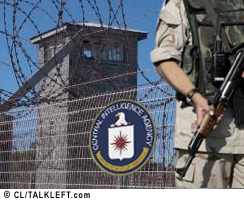
The Associated Press reports today the U.S. has held 14,000 detainees overseas in secret prisons "beyond the reach of established law."
The bitterest words come from inside the system, the size of several major U.S. penitentiaries.
"It was hard to believe I'd get out," Baghdad shopkeeper Amjad Qassim al-Aliyawi told The Associated Press after his release -- without charge -- last month. "I lived with the Americans for one year and eight months as if I was living in hell."
Captured on battlefields, pulled from beds at midnight, grabbed off streets as suspected insurgents, tens of thousands now have passed through U.S. detention, the vast majority in Iraq. Many say they were caught up in U.S. military sweeps, often interrogated around the clock, then released months or years later without apology, compensation or any word on why they were taken. Seventy to 90 percent of the Iraq detentions in 2003 were "mistakes," U.S. officers once told the international Red Cross.
Human Rights groups have long protested the policy.
Human rights groups count dozens of detainee deaths for which no one has been punished or that were never explained. The secret prisons -- unknown in number and location -- remain available for future detainees. The new manual banning torture doesn't cover CIA interrogators. And thousands of people still languish in a limbo, deprived of one of common law's oldest rights, habeas corpus, the right to know why you are imprisoned.
"If you, God forbid, are an innocent Afghan who gets sold down the river by some warlord rival, you can end up at Bagram and you have absolutely no way of clearing your name," said John Sifton of Human Rights Watch in New York. "You can't have a lawyer present evidence, or do anything organized to get yourself out of there."
One group who is doing something about it: The National Religious Campaign Against Torture. As The Nation reports:
In Connecticut, for example, religious activists affiliated with the National Religious Campaign Against Torture have initiated a campaign that seeks to hold all Senate and House candidates in the state accountable for their positions on torture and the abuse of executive power. They have begun meeting with Congressional candidates and injecting the torture issue into campaign events.
| < John Yoo's Falsehoods | David Broder's Priorities > |


