
Study: Lethal Injection in Executions May Cause Death by Chemical Asphyxiation
By Jeralyn, Section Death Penalty
Posted on Mon Apr 23, 2007 at 06:00:34 PM EST
Tags: lethal injection (all tags)
Posted on Mon Apr 23, 2007 at 06:00:34 PM EST
Tags: lethal injection (all tags)


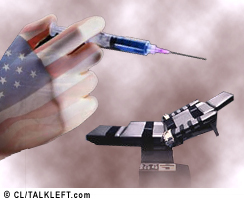
A medical study out today casts new doubt on whether lethal injection causes the painless death we've all been told.
The study analyzed executions in two states, California and North Carolina. The findings:
We were able to analyze only a limited number of executions. However, our findings suggest that current lethal injection protocols may not reliably effect death through the mechanisms intended, indicating a failure of design and implementation. If thiopental and potassium chloride fail to cause anesthesia and cardiac arrest, potentially aware inmates could die through pancuronium-induced asphyxiation. Thus the conventional view of lethal injection leading to an invariably peaceful and painless death is questionable.
More...
| < DNA Clears 200th Person | The 50 Best Restaurants in the World > |